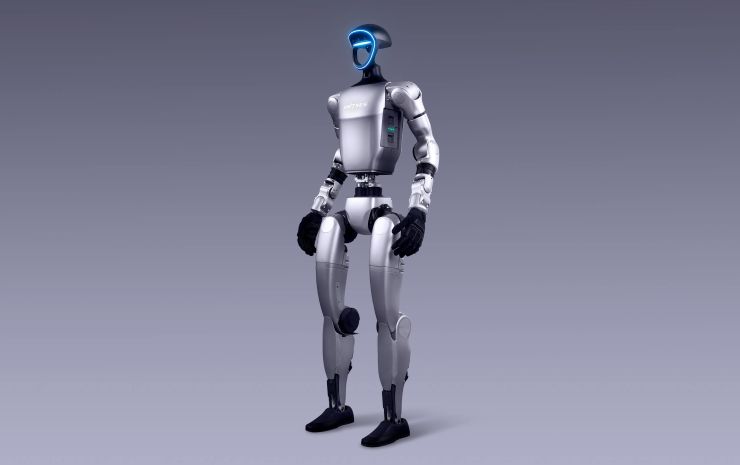
Robotics represents the convergence of mechanical engineering, artificial intelligence, electronics, sensors, biomimicry, and cognitive science to create machines capable of perceiving the world, acting within it, and performing tasks once exclusive to humans. Over time, robots have evolved from simple mechanical arms in factories to intelligent, adaptive systems capable of reasoning, learning, and interacting with environments in meaningful ways. Modern robots are designed not only for automation but for collaboration — machines that understand physical environments, human behavior, and complex tasks, enhancing productivity, safety, and human capability across industries. Robotics no longer represents a future fantasy; it embodies a transformative technological era in which machines are not merely tools but intelligent partners.
Humanoid robots stand at the peak of this evolution, engineered to mirror the form, structure, and often behavior of the human body. They walk, run, balance, manipulate objects, speak, and interpret emotions using advanced motion systems, neural networks, and real-time perception algorithms. Built with articulated limbs, tactile sensors, force control systems, vision-based navigation, and sophisticated balance mechanics, humanoids replicate the physical versatility of people so they can operate in environments designed for humans. Where traditional robots excel in structured settings like assembly lines, humanoid robots aim to thrive in dynamic worlds — offices, homes, hospitals, disaster zones, and public spaces. Their greatest strength is adaptability; rather than redesigning cities and workplaces for machines, humanoids adapt to the world we already built.
At their core, these robots rely on artificial intelligence to observe, learn, and interact. They process sensor streams from cameras, microphones, depth sensors, and touch feedback, converting raw data into spatial understanding and human-aware behavior. Machine-learning models help them identify objects, understand speech, recognize faces, and respond to human intent. Motion planning algorithms combine physics, biomechanics, and computation to produce fluid walking, object handling, and navigation. Large-scale neural networks assist humanoids in reasoning, conversational interaction, and context-aware decision-making, creating robots that do not simply move but understand tasks and the meaning behind them. As AI evolves, humanoids increasingly develop the capability to learn new tasks through observation rather than explicit programming — a leap toward true autonomous skill acquisition.
These intelligent machines are reshaping industry and society in significant ways. Factories deploy collaborative robots — cobots — that work safely beside humans, improving production speed and precision. Hospitals use robotic assistants for patient transport, surgery, and elderly support, reducing nurses’ workloads and enabling personalized care. Hospitality robots greet guests, guide them through public spaces, and assist with luggage. Homes of the future may include personal assistant humanoids capable of cooking meals, cleaning environments, organizing tasks, and providing companionship to seniors or individuals with disabilities. In hazardous environments, robots act as first responders, entering burning buildings, defusing explosives, and exploring disaster areas too dangerous for humans. In construction, agriculture, logistics, and space exploration, humanoid robots promise greater safety, efficiency, and capability, extending human reach into environments beyond human physical limits.
Achieving human-level dexterity, emotion understanding, and cognitive reasoning remains a grand challenge. True general-purpose humanoids must balance mechanical sophistication, computing power, battery efficiency, and real-time learning. Engineers confront limitations in actuators that mimic muscles, power systems that sustain long operation, flexible materials that behave like skin and tendons, and AI systems that reason reliably in unpredictable situations. Ethical and social considerations also accompany their rise: how humans emotionally bond with robots, how workplaces evolve, how society ensures safety and trustworthy AI behavior, and how jobs shift as automation increases. Governments and researchers work to ensure that robotics development remains aligned with human values, safety standards, and economic fairness.
Despite challenges, progress accelerates rapidly. Companies worldwide are building multi-purpose humanoids for manufacturing, life assistance, warehouse operations, and personal service. Robotics labs push forward innovations in soft robotics, neural control interfaces, self-learning locomotion, and natural-language interaction. Robotics is moving beyond metal bodies and repetitive motion — toward life-like movement, adaptive intelligence, and robots capable of working in harmony with people. In this new frontier, machines do not replace humanity but extend its capability, transforming how we live, build, heal, and explore. The future is not a divide between humans and robots but a partnership — one where machines take on the physical strain and repetitive tasks, allowing humans to focus on creativity, care, innovation, and connection.
Robotics and humanoid engineering symbolize humanity’s ambition to build life-like companions, workers, and explorers that reflect our abilities while transcending our limitations. They stand at the intersection of imagination and engineering, bridging the human experience with the future of intelligent mechanical life. As technology matures, humanoid robots will become not merely tools but trusted allies, amplifying human potential and reshaping civilization through collaboration, intelligence, and an ever-deepening connection between biological and synthetic worlds.
Leave a Reply