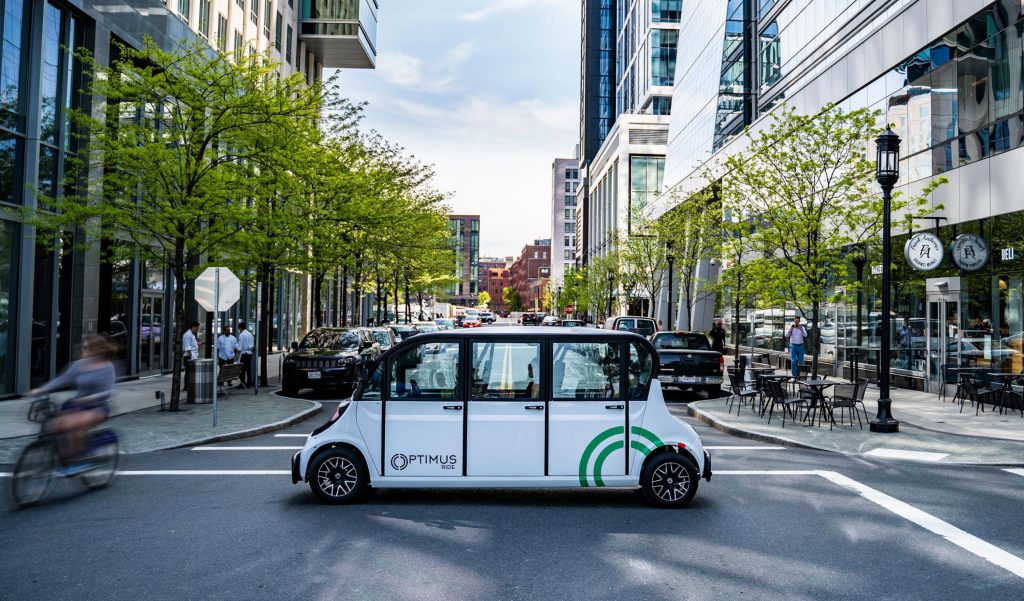
Autonomous vehicles and smart mobility represent a fundamental reimagining of transportation, where machines navigate roads, coordinate routes, communicate with each other, and carry people and goods with minimal human involvement. This new era of mobility is driven by advances in artificial intelligence, robotics, sensors, real-time mapping, connectivity, and sustainable energy technologies. Instead of humans making every driving decision, automation empowers vehicles to perceive the world, interpret traffic conditions, and select safe and efficient paths using complex algorithmic intelligence. Transportation shifts from being a manual activity to a coordinated digital network where safety, efficiency, and environmental responsibility become central principles.
An autonomous vehicle senses its surroundings through an intelligent combination of cameras, radar, lidar, ultrasonic sensors, and GPS systems that collectively build a precise, constantly updated model of the environment. Machine-learning models recognize pedestrians, cyclists, road signs, obstacles, and lane boundaries, while predictive engines anticipate movements of objects and other vehicles. Every moment, the vehicle makes decisions about acceleration, braking, steering, lane changing, and route optimizing, often processing scenarios faster than human reflexes could manage. Over time, these systems learn from massive volumes of real-world and simulated driving data, improving perception accuracy and decision quality. The goal is not just hands-free driving, but a machine capable of handling the complexity of urban traffic, weather variations, and unpredictable human behavior.
Smart mobility extends beyond self-driving cars to create a seamless, interconnected transport ecosystem. It integrates electric vehicles, ride-sharing platforms, autonomous taxis, delivery robots, drones, scooters, public transit, and smart traffic systems into a fluid mobility network. Cities equipped with intelligent infrastructure communicate with vehicles to manage congestion, adjust traffic lights dynamically, and allocate road space efficiently. The core philosophy shifts from personal car ownership to mobility as a service, where people access transportation on demand rather than owning private vehicles that sit idle most of the time. This approach reduces parking needs, traffic density, and urban pollution while freeing public space for parks, walking areas, and community life.
In logistics and industry, autonomous mobility promises a revolution. Self-driving trucks transport goods across long distances with minimal rest times, automated forklifts and robots handle warehouse operations, and delivery drones and sidewalk robots move packages directly to homes and businesses. Supply chains become faster, safer, and more reliable as automation minimizes delays, human fatigue, and error risks. Ports, factories, and distribution hubs evolve into smart logistics zones where autonomous machinery collaborates seamlessly with human supervisors, powering a highly connected and efficient economic system.
Safety remains one of the most powerful motivations for autonomous technology. Human error accounts for the majority of traffic accidents worldwide, and self-driving systems aim to reduce crashes, injuries, and fatalities through precise detection, real-time decision-making, and constant vigilance. Ethical considerations and regulatory frameworks accompany this transformation, addressing questions about accountability, cybersecurity, data privacy, and the balance between human and machine authority. Engineers and policymakers are shaping rules about how autonomous vehicles interact on public roads, how they handle emergencies, and how safety standards evolve with technology maturity.
The evolution toward autonomous mobility also encourages a shift to electric propulsion, sustainable urban design, and environmentally conscious transport models. Energy-efficient vehicles, smart charging stations, wireless charging lanes, and renewable-powered fleets support a cleaner future with lower emissions and reduced dependence on fossil fuels. Cities begin to imagine roads shared by self-driving buses, pedestrian-first districts, smart bike networks, and intelligent parking systems that respond dynamically to demand. The transportation system becomes not just automated, but optimized — a living digital organism that learns and adapts.
Despite immense potential, challenges remain. Autonomous systems must navigate legal complexities, cultural acceptance, edge-case scenarios, and the need for secure digital protection against cyberattacks. Public trust grows gradually as systems prove reliability in controlled environments, pilot programs, and increasingly complex real-world streets. Technologists continue improving perception, control, ethical programming, and fail-safe systems to ensure machines respond responsibly in unpredictable situations. The transition will be gradual, not sudden, blending human-driven and autonomous systems for many years.
Ultimately, autonomous vehicles and smart mobility redefine the purpose of transportation. They strive to transform roads into spaces of precision and safety, cities into environments designed for people rather than cars, and travel into a connected experience free from stress and inefficiency. In this future, mobility is not merely movement — it becomes a service, a system, and a shared digital intelligence that enables society to move with greater freedom, sustainability, and harmony. Autonomous mobility stands not only as a technological achievement, but as a profound evolution in how humanity interacts with time, space, and progress itself.
Leave a Reply