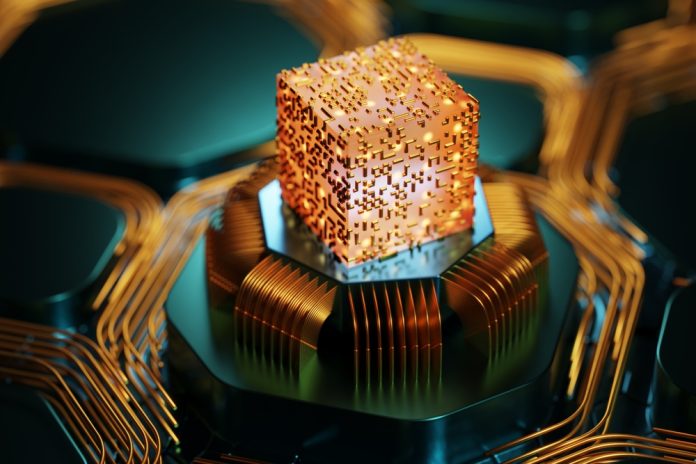
Quantum computing is a new frontier in computation that leverages the laws of quantum mechanics to process information in ways impossible for classical machines. While traditional computers rely on bits that can exist only as zero or one, quantum computers use qubits, which can exist as zero, one, or any quantum combination of both states at the same time. This ability, called superposition, allows quantum computers to explore many possibilities in parallel rather than step-by-step like classical systems. As a result, problems that would take classical supercomputers thousands of years might be solved by a sufficiently powerful quantum machine in hours or minutes.
The power of quantum computing also comes from another remarkable phenomenon called entanglement, where qubits become deeply connected so that the state of one instantly influences the other, even if they are physically far apart. This enables quantum processors to coordinate qubits in a unified system, performing complex computations with extraordinary efficiency. Another property known as quantum interference allows these computers to enhance correct computational paths while cancelling out incorrect ones, boosting the accuracy and speed of solutions. These principles together create a computational model that does not simply process information — it explores and interacts with it in a fundamentally different way.
Quantum computing is not designed to replace everyday classical computers. Instead, it is meant for problems that are currently considered unsolvable or extremely inefficient for digital machines. Quantum systems are particularly valuable for simulating nature at the atomic and molecular level, since nature itself operates according to quantum laws. This makes quantum computing incredibly promising for drug discovery, molecular chemistry, materials science, renewable energy research, and creating more efficient batteries and fertilizers. In finance, quantum algorithms could optimize investment portfolios and model market behavior in real time with unmatched accuracy. In logistics and transportation, quantum computing could revolutionize supply-chain planning, route optimization, and global resource allocation.
However, quantum computing also presents profound challenges, especially in cybersecurity. Many current encryption systems rely on mathematical problems that classical computers cannot solve in a feasible time. A powerful quantum computer could break traditional encryption, potentially exposing digital communications, financial systems, and national-security data. At the same time, quantum technology is expected to enable new forms of secure communication through quantum cryptography, including quantum key distribution, which is considered theoretically unbreakable. This dual nature — being both a threat and a solution — makes cybersecurity one of the most urgent areas of quantum research.
Despite its enormous potential, quantum computing is still in its early stages. Qubits are extremely delicate and easily disturbed by temperature, electromagnetic interference, and physical vibrations, a challenge known as decoherence. Scientists are developing sophisticated error-correction techniques and new types of qubits to stabilize quantum operations. Multiple competing technologies are being explored, including superconducting circuits, trapped ions, neutral atoms, topological qubits, and photonic quantum systems. Global investment from governments, corporations, and research institutions has created a rapidly growing ecosystem of quantum hardware, algorithms, software tools, and cloud platforms that allow developers to experiment with real quantum machines remotely.
Quantum computing represents a fundamental shift in how humanity will understand and manipulate information. It promises breakthroughs that could accelerate scientific discovery, revolutionize industries, and solve global challenges such as climate modeling, energy efficiency, and advanced medical research. At the same time, it raises ethical, security, and societal questions that require careful planning and international cooperation. The journey toward fully functional quantum computers is still ongoing, but the progress already achieved signals a future where computation is no longer limited by classical boundaries. Instead, we enter an era where the strange rules of the quantum universe become tools for innovation, knowledge, and transformation.
Leave a Reply